
How GLP-1 Medications Work: The Honest 2026 Guide

What Is GLP-1, Exactly?
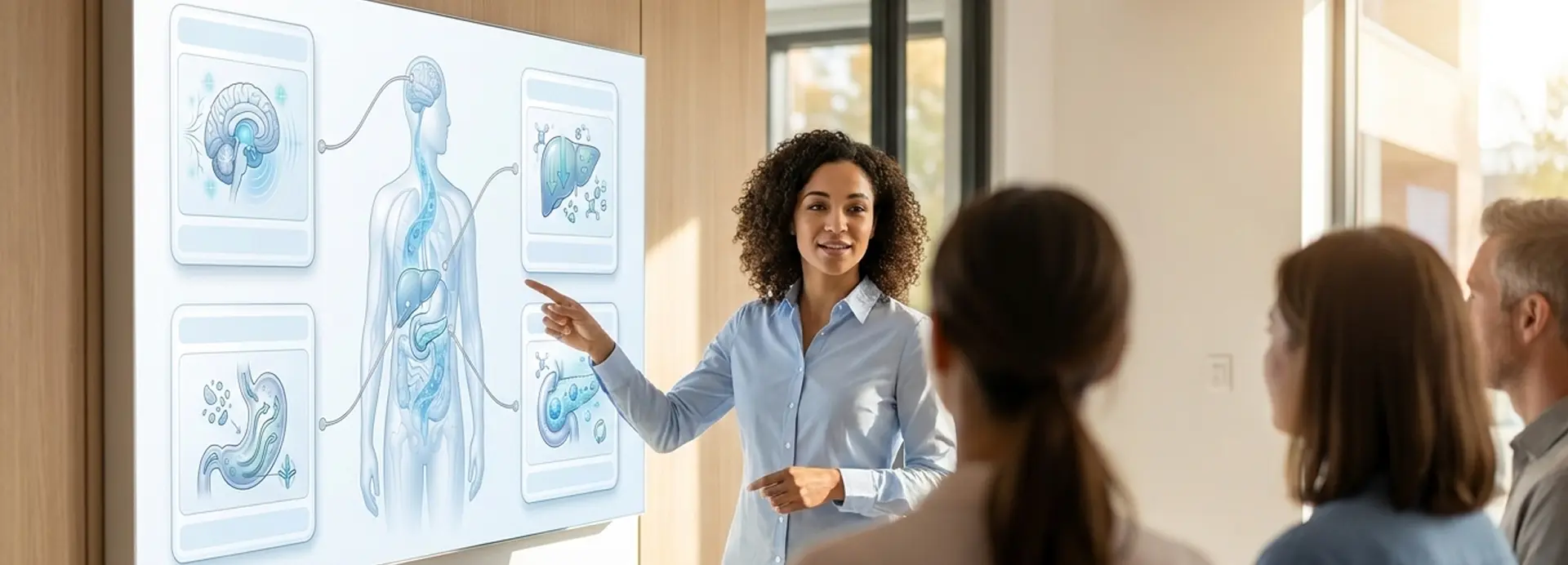
GLP-1 stands for glucagon-like peptide-1. It’s a hormone, not a drug. Your small intestine makes it within minutes of eating. Its job is to tell your pancreas, liver, stomach, and brain that food has arrived, and to act accordingly.
On its own, natural GLP-1 barely lasts two minutes before an enzyme called DPP-4 breaks it down. That’s the entire reason GLP-1 medications exist — to keep that same signal switched on for days instead of minutes. Doctors first studied this for type 2 diabetes. The weight loss turned out to be the bigger headline.
The 4 Ways GLP-1 Medications Work in Your Body
GLP-1 medications don’t do one thing. They do four, at the same time, in four different organs.
Your Pancreas Releases More Insulin — Only When You Need It
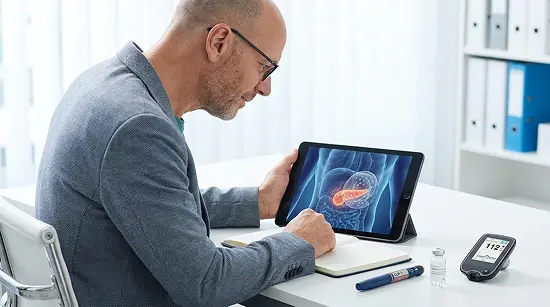
GLP-1 medications attach to receptors on your pancreas’s beta cells. That triggers more insulin, the hormone that clears sugar from your blood. Here’s the key part: this only happens when your blood sugar is already high. Once it’s normal, the signal fades. That’s why GLP-1 drugs carry a much lower risk of dangerous low blood sugar than older diabetes drugs like insulin or sulfonylureas.
Your Liver Stops Adding More Sugar
Glucagon is the hormone that tells your liver to release stored sugar into your blood. GLP-1 medications turn that signal down. Less glucagon means your liver backs off, and your blood sugar has one less thing pushing it up.

Your Stomach Slows Down
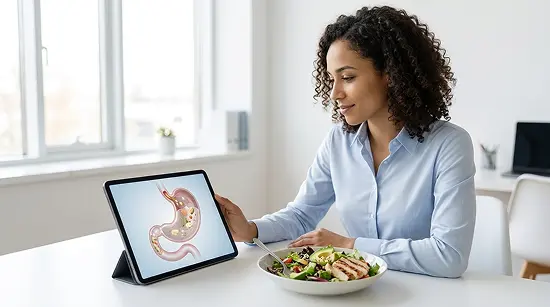
GLP-1 delays gastric emptying — the process of food leaving your stomach. Food sits longer, so you feel full longer, and your blood sugar rises more gradually after meals. This same mechanism is also the reason nausea and constipation are the most reported side effects. We cover that in full in our side effects guide, linked below.
Your Brain Gets a Direct Message
GLP-1 receptors sit in your hypothalamus, the brain’s appetite control center, and in reward-related regions tied to cravings. Activating them turns down hunger signals and what a lot of patients describe as “food noise” — the constant background thinking about food.

Why Medications Last Longer Than Your Own GLP-1
Your body’s own GLP-1 is gone in about two minutes. Medications are built to survive. Semaglutide, tirzepatide, and liraglutide are modified versions of the hormone that resist the DPP-4 enzyme that normally breaks it down fast. Foundayo, approved in April 2026, skips the peptide chemistry entirely — it’s a small-molecule pill that reaches the same receptor a completely different way, which is also why it’s the first GLP-1 that doesn’t need refrigeration, injection, or an empty stomach.
| Medication | Hormones targeted | How it’s taken | Roughly how long it stays active |
|---|---|---|---|
|
Semaglutide
Ozempic, Wegovy, Rybelsus
|
GLP-1 only
|
Weekly injection
or
Daily pill
|
About 7 days
Steady weekly release
|
|
Tirzepatide
Mounjaro, Zepbound
|
GLP-1 + GIP
|
Weekly injection
|
About 5 days
Dual-agonist clearance
|
|
Liraglutide
Saxenda, Victoza
|
GLP-1 only
|
Daily injection
|
About 13 hours
Requires daily dosing
|
|
Orforglipron / Foundayo
Expected 2026
|
Non-peptide molecule
|
Daily pill
Any time, no food or water restrictions
|
Oral, once-daily
Convenient daily schedule
|
Want The Full Side Effect Picture Before You Start?
How This Turns Into Weight Loss
Weight loss isn’t a separate mechanism. It’s what happens when the four effects above add up. Less appetite plus a slower stomach plus a stronger fullness signal usually adds up to eating less, without a constant fight against hunger.
In Eli Lilly’s ATTAIN-1 trial, people who stayed on the highest dose of Foundayo through the full trial lost an average of 27.3 pounds (12.4% of body weight), against 2.2 pounds (0.9%) on placebo. That’s the mechanism translated into a real number, not a marketing claim.
How This Helps Blood Sugar and Type 2 Diabetes
For type 2 diabetes, the same two pancreas-and-liver effects are the whole point: more insulin when sugar is high, less glucagon pushing it up. Because both effects are glucose-dependent, GLP-1 drugs lower blood sugar without flattening it the way insulin can. That’s a meaningful safety difference for people managing diabetes day to day.
Semaglutide vs. Tirzepatide vs. the New Oral Pill
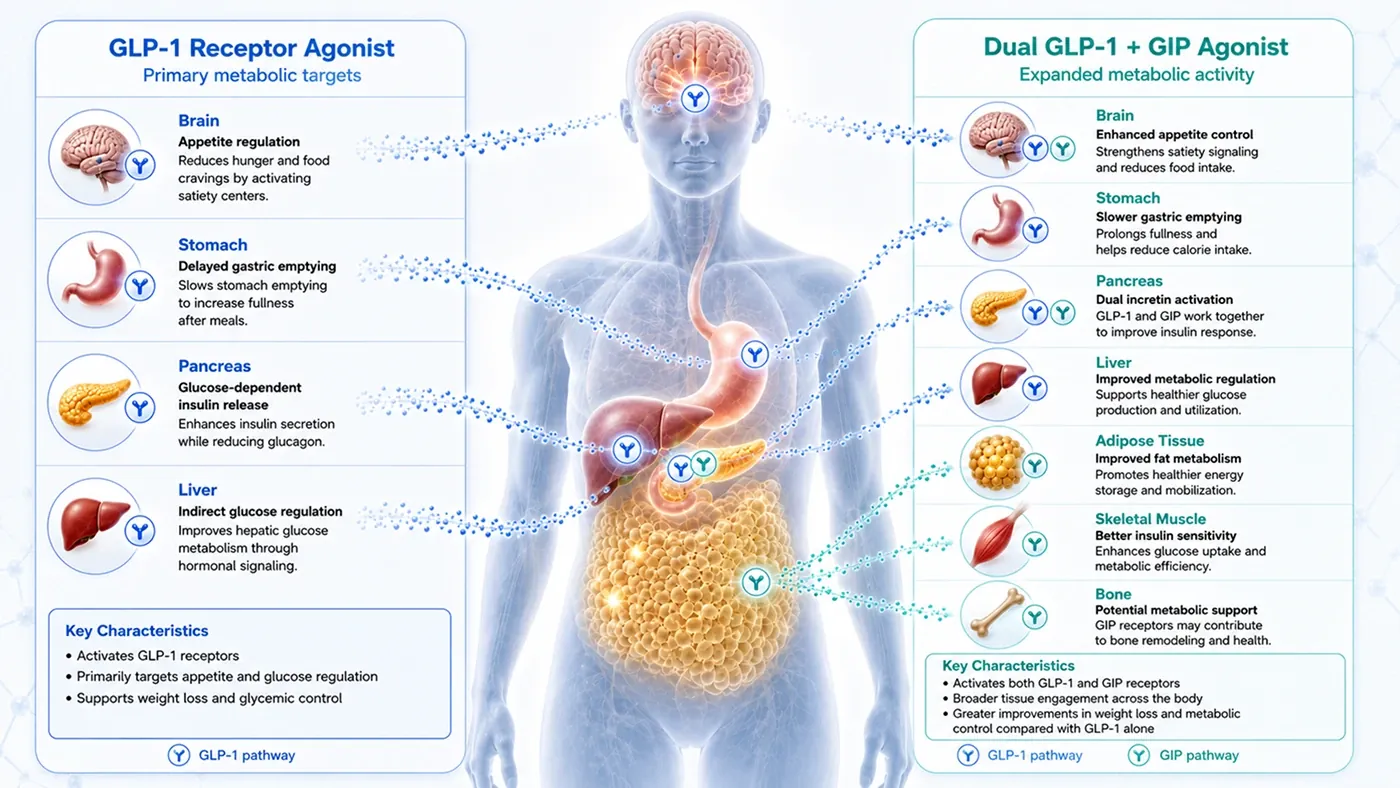
All GLP-1 medications hit the same core receptor. The differences are in what else they touch. Tirzepatide also activates GIP receptors, which reach into fat tissue and liver metabolism — one reason tirzepatide-based drugs tend to produce larger average weight loss in head-to-head trials.
Foundayo stays GLP-1-only, but changes the delivery: a once-daily tablet you can take with or without food, at any time — unlike Rybelsus, which still requires an empty stomach and a 30-minute wait before eating.
How Long Until You Feel It Working?
Some effects start almost immediately — slower digestion and lower appetite can show up in the first week. The bigger, cumulative effects build over months, because doses start low and increase gradually, usually every 4 weeks, to keep side effects manageable. Most people reach their target maintenance dose, and the fuller effect that comes with it, somewhere around 3 to 6 months in.
Ready To Compare Providers Who Prescribe These Medications?
How GLP-1 Medications Work – Frequently Asked Questions
Does GLP-1 Work The Same Way For Weight Loss And Diabetes?
The mechanism is identical — insulin up, glucagon down, digestion slower, appetite down. The difference is which effect matters most for you. For diabetes, the blood sugar effects are the goal. For weight loss, the appetite and digestion effects are.
Why Does GLP-1 Make You Feel Less Hungry?
GLP-1 receptors sit directly in your hypothalamus, the brain region that controls hunger. Activating them turns down hunger signals and reduces “food noise” — the constant background thinking about food many people describe before starting treatment.
Can Your Body Get Used To GLP-1 Over Time?
Some tolerance to the appetite effect is reported by some patients over long-term use, though the blood sugar and gastric-emptying effects tend to persist. This is one reason dose adjustments happen over time — talk to your prescriber if effects seem to be fading.
What Happens If You Stop Taking A GLP-1 Medication?
The hormone-mimicking effect fades within days to weeks, since it isn’t stored in your body. Appetite typically returns to baseline, and many people regain some or all of the weight lost without continued treatment or other supports in place.
Is Foundayo (Orforglipron) A Real GLP-1 Medication?
Yes. It’s FDA-approved and activates the same GLP-1 receptor as injectable drugs. The difference is chemistry: it’s a small molecule instead of a peptide, which is why it survives as a pill you can take without fasting.
Do GLP-1 Medications Work If You Don’T Change Your Diet?
They still lower appetite and slow digestion regardless of diet. But the clinical trials behind every approval, including Foundayo’s, paired the medication with a reduced-calorie diet and more physical activity — that combination is what the approved label reflects, not the drug alone.
Why Do Some GLP-1 Drugs Work Better Than Others For Weight Loss?
Mostly because of the dual-hormone effect. Tirzepatide’s added GIP activity reaches into fat and liver metabolism in ways single-hormone drugs don’t, which shows up as a difference in average trial results.
Is The Natural GLP-1 Hormone In Your Body Dangerous In Large Amounts?
No — your body already regulates it tightly and breaks it down in about two minutes. GLP-1 medications are dosed and monitored specifically because they don’t degrade that fast. That’s a deliberate design choice, not a risk of the natural hormone itself.
Looking for More Answers?
View the full GLP-1 FAQ or email us at support@glp1rating.com
Medical Disclaimer: This content is for informational purposes only and does not constitute medical advice. GLP-1 medications require a prescription. Consult a licensed healthcare provider before starting any weight loss or diabetes treatment.