
Is There a GLP-1 Diet?
No single official GLP-1 diet exists, but there is now expert guidance on what to eat. In May 2025, four groups published a joint advisory on nutrition during GLP-1 treatment: the American College of Lifestyle Medicine, the American Society for Nutrition, the Obesity Medicine Association and The Obesity Society. It appeared in the American Journal of Clinical Nutrition and in Obesity.
The advisory’s starting point is simple. GLP-1 drugs such as semaglutide (Wegovy) and tirzepatide (Zepbound) cut appetite hard. People taking them eat 16% to 39% fewer calories, and that drop can leave them short on vitamins, minerals and protein. The risk climbs when intake falls below about 1,200 calories a day for women or 1,800 for men.
So the goal isn’t a special menu. It’s a normal, healthy pattern packed into smaller portions. The advisory also says people should get individualized nutrition counseling from a registered dietitian when one is available.
What Foods Should You Eat on GLP-1?
The best GLP-1 friendly foods are the ones that deliver a lot of nutrition in a small portion. The joint advisory lists these food groups to favor:
| Food group | Examples from the advisory | Why it helps on a GLP-1 |
|---|---|---|
| Lean proteins and eggs | Poultry, fish and seafood, eggs | Helps protect muscle while you lose weight |
| Dairy | Yogurt, milk, cheese | Protein, calcium and vitamin D in a small serving |
| Vegetables | Broccoli, leafy greens, tomatoes, carrots, peas, squash | Fiber, vitamins and fluid with few calories |
| Fruits | Berries, apples, citrus, bananas, grapes, avocado | Fiber and vitamins; easy to eat when appetite is low |
| Whole grains | Oats, quinoa, brown rice, whole-grain bread, cereal and pasta | Fiber that helps with constipation |
| Nuts and seeds | Almonds, peanuts, chia, sesame and hemp seeds | Protein and healthy fat in a few bites |
| Plant oils | Olive, canola and avocado oil | Healthier fats for cooking |
| Drinks | Water; ginger or peppermint tea | Fluids, plus some relief from nausea |
Beans and lentils fit too. They count as protein and fiber at the same time, which matters when you can only eat a little. If you don’t eat meat, tofu, beans, lentils, dairy and eggs can cover your protein.
What Foods Should You Avoid on GLP-1?
No food is banned, but some cause trouble on a GLP-1 more often than others. The advisory suggests keeping these to a minimum:
- Refined carbs and added sugar: white flour, pastries, candy and sweetened cereal.
- Sugar-sweetened drinks: soda, sweet tea and juice drinks.
- Red and processed meats: bacon, sausage and deli meats.
- Most fast food, sweets and salty snacks.
- Large meals: vomiting is more likely after a big meal.
- Alcohol: the advisory recommends “minimal alcohol intake.”
Fatty and fried foods deserve special mention. GLP-1s slow how fast your stomach empties, and fat slows it further. The advisory suggests avoiding fatty or high-fiber foods during the first few days of treatment, when nausea is most common. Later, you can add fiber back gradually.
The advisory also lists habits to avoid: long stretches without food, eating out of emotion or boredom, and late-night eating. Its flip side is worth knowing too: it encourages flexibility and portion-controlled treats, not a rigid list of forbidden foods.
How Much Protein Do You Need on GLP-1?
The usual minimum is 0.8 grams of protein per kilogram of body weight a day. During active weight loss, targets of 1.2 to 1.6 g/kg have been proposed. That’s the range the joint advisory reports, and it says the right number is still debated.
The debate is about which weight to use. For people with obesity, using actual body weight can overstate protein needs, so some clinicians use an adjusted weight or lean body mass instead. The advisory says intake shouldn’t fall below 0.4 to 0.5 g/kg, and it advises against staying at 2 g/kg or more for long periods.
Here’s what those targets look like in grams. The table uses actual body weight, which may overstate your needs, so treat it as a starting point for a talk with your clinician:
| Body weight | 0.8 g/kg (general minimum) | 1.2 g/kg | 1.6 g/kg |
|---|---|---|---|
| 150 lb (68 kg) | 54 g | 82 g | 109 g |
| 200 lb (91 kg) | 73 g | 109 g | 145 g |
| 250 lb (113 kg) | 91 g | 136 g | 181 g |
Why it matters: in the STEP 1 trial of semaglutide, people lost 13.6 kg on average. Of that, 8.3 kg was fat and 5.3 kg (38%) was lean mass, which includes muscle. The advisory estimates that about 20% of the weight lost was muscle. Getting enough protein, along with strength training, helps keep more of it.
Which Foods Are Highest in Protein?
When your appetite is small, protein-dense foods do the most work. These figures come from USDA FoodData Central, checked November 8, 2026:
| Food | Serving | Protein | Notes |
|---|---|---|---|
| Chicken breast, roasted | 3 oz | 26 g | Lean; easy to batch-cook |
| Firm tofu | ½ cup | 22 g | Plant protein |
| Salmon, cooked | 3 oz | 19 g | Also has omega-3 fats |
| Greek yogurt, plain nonfat | 6 oz | 16 g | Works when solid food feels heavy |
| Cottage cheese, 2% | ½ cup | 12 g | Soft and mild |
| Lentils, boiled | ½ cup | 9 g | Plus about 8 g of fiber |
| Milk, 1% | 1 cup | 8 g | Good base for a smoothie |
| Black beans, boiled | ½ cup | 8 g | Plus about 7 g of fiber |
| Egg, hard-boiled | 1 large | 6 g | Easy snack |
A practical habit is to eat the protein part of a meal first, before you fill up. Protein shakes can help on low-appetite days, but they’re a supplement, not a meal plan. The advisory notes that smoothies made with fruit, vegetables and unsweetened milk or yogurt, plus cottage cheese and soups, often go down easier than red meat or hard cheese.
What Should You Eat When You Feel Nauseous?
Eat small amounts often, and don’t skip meals. Nausea is the most common GI side effect of GLP-1s. The joint advisory says it often hits in the morning or after long gaps without food, and that skipping meals can start a cycle where nausea gets worse.
Its practical tips:
- Eat a small breakfast, then small meals every 3 to 4 hours.
- Drink enough fluids throughout the day.
- Go easy on fatty and high-fiber foods in the first few days after starting or raising a dose.
- Try ginger or peppermint tea.
- Stop eating as soon as you feel full. Vomiting is more likely after large meals.
Soft, simple foods such as yogurt, soup and smoothies often sit better than heavy meals. Dehydration is the danger to watch. The advisory warns that severe nausea, vomiting or diarrhea can lead to acute kidney injury. Call your prescriber if you can’t keep fluids down. They can also prescribe anti-nausea medicine while you adjust.
When to call your prescriber
Call if you can’t keep fluids down, have severe or lasting stomach pain, or notice signs of dehydration such as dizziness or very dark urine. These can point to problems beyond normal side effects. Our GLP-1 side effects guide lists the warning signs from the FDA labels.
How Do You Handle Constipation and Diarrhea?
Fluids and fiber are the first steps for constipation, added slowly. The joint advisory calls constipation common with weight loss and says to manage it early. It suggests building up fiber from foods like prunes, other dried fruit, vegetables and whole grains, and drinking enough water.
One twist: foods high in protein or fat slow digestion, which can make constipation worse. If that happens, the advisory says your clinician may suggest cutting back on them for a while, or adding magnesium, a fiber supplement or another remedy. Ask before you start any supplement.
Diarrhea can happen too. Keep up your fluids, choose plain foods for a day or two and tell your prescriber if it lasts.
Check the Side Effects Before You Start
What Does a Day of GLP-1 Meals Look Like?
A GLP-1 meal plan is small and regular: three small meals and one or two snacks, each with some protein. The sample day below follows the joint advisory’s food groups. It’s an example, not a prescription. It has no calorie count, because your needs depend on your size, your medication and your clinician’s advice.
| Meal | Example | Protein source |
|---|---|---|
| Breakfast | Greek yogurt with berries and a spoon of chia seeds | Yogurt |
| Late morning | A hard-boiled egg and a small apple | Egg |
| Lunch | Lentil and vegetable soup with a slice of whole-grain toast | Lentils |
| Afternoon | Cottage cheese with sliced peaches, or a fruit and milk smoothie | Dairy |
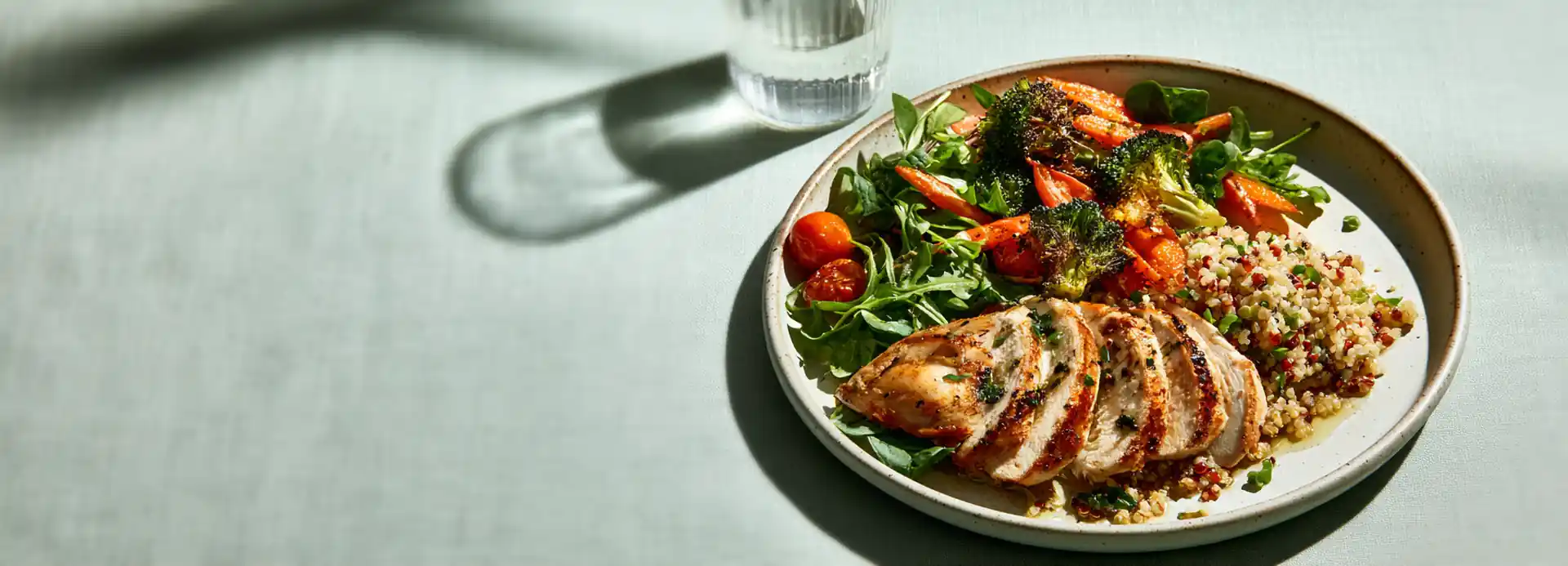
| Dinner | 3 oz baked salmon, roasted broccoli and a small scoop of brown rice | Salmon |
| Drinks all day | Water; ginger or peppermint tea |
On days when you have no appetite, swap a meal for a smoothie or a bowl of soup rather than skipping it. The advisory suggests setting a reminder to eat if you keep forgetting. The advisory notes that GI side effects are most likely after you start or raise a dose, so plan simple, soft meals for those weeks.
Do You Need Supplements on GLP-1?
Maybe. The joint advisory says clinicians can consider vitamin D, calcium, B12 or a multivitamin for people at risk, at doses tailored to them. It names iron, calcium, magnesium, zinc and vitamins A, D, E, K, B1, B12 and C as nutrients that can run low when you eat much less.
It also lists signs of a deficiency that go beyond normal side effects: unusual fatigue, a lot of hair loss, flaky or itchy skin, muscle weakness, slow wound healing and unusual bruising. If you notice these, ask your clinician about blood tests rather than guessing with supplements.
Strength training belongs here too. The advisory says resistance training, or a mix of resistance and aerobic exercise, helps protect muscle and bone during weight loss. Walking alone does less.
Does It Matter Which GLP-1 You Take?
For most food choices, no. The same eating pattern applies to weekly shots like Wegovy and Zepbound and to the newer pills. Timing is the exception. The Wegovy pill has to be taken on an empty stomach with up to 4 ounces of water, and you wait 30 minutes before eating or drinking anything else. Foundayo, Lilly’s pill, can be taken any time, with or without food.
If you’re still choosing between a pill and a shot, our comparison of the Wegovy pill and Foundayo covers the routines and prices side by side. Cost matters for staying on treatment, too: see our guide to GLP-1 cost without insurance.